MILITARY SEIZES POWER IN GUINEA-BISSAU — PRESIDENT DEPOSED AS ARMY OFFICERS DECLARE CONTROL
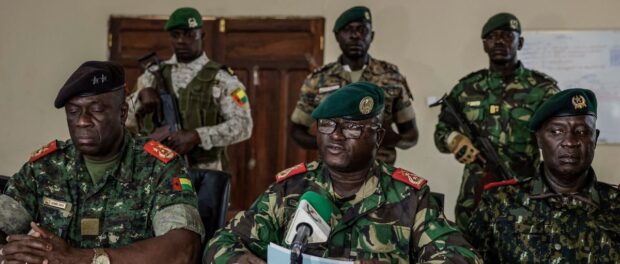
Bissau, Guinea-Bissau — In a stunning and fast-moving escalation that has sent shockwaves across West Africa, a group of senior army officers in Guinea-Bissau announced today that they have seized power, deposed the president, and dissolved all state institutions. The declaration, delivered on national radio in the early hours of the morning, marks the country’s latest plunge into political turmoil—and ignites fears of yet another destabilizing crisis in a region already rattled by a string of military takeovers.
The officers, speaking on behalf of what they described as the “National Restoration Council,” claimed they acted to “save the nation from disorder, corruption, and political paralysis,” accusing the civilian government of failing to guarantee stability or economic progress. The president’s whereabouts remain unknown, though unconfirmed reports suggest he may have been placed under military guard.
A Country Caught in an Endless Coup Loop
Guinea-Bissau, long burdened by political volatility and military interference, now faces what appears to be its most dramatic rupture in years. Despite recent efforts to strengthen democratic institutions, the nation’s fragile governance architecture has repeatedly buckled under factional infighting, contested elections, and persistent corruption allegations.
Today’s events follow months of simmering tension between the presidency and sections of the armed forces—tensions analysts say were “an explosion waiting to happen.”
Military: “We Are Restoring Order”
The self-appointed junta claims to have suspended the constitution and imposed a nationwide curfew. While insisting that they will safeguard civil liberties, their statement simultaneously banned public gatherings and announced that all “strategic state infrastructure” is now under military control.
In a particularly bold assertion, the officers vowed to “restructure the state from the ground up,” signaling what could be a prolonged military transition rather than a swift handover to civilian rule.
Regional and International Shockwaves
The Economic Community of West African States (ECOWAS), already grappling with coup outbreaks in Mali, Burkina Faso, Guinea, and Niger, is facing yet another governance emergency. Early reactions from regional officials labeled the takeover “unacceptable” and hinted at possible sanctions.
International observers warn that Guinea-Bissau’s instability could have major implications for anti-trafficking efforts, maritime security in the Gulf of Guinea, and the broader regional fight against extremist expansion.
Uncertain Road Ahead
With the president deposed, communications partially restricted, and the army deploying across key points in the capital, ordinary citizens have been left anxious and confused. Banks and schools remain closed, and residents report hearing sporadic gunfire overnight.
Diplomats and analysts say the next 48 hours will determine whether Guinea-Bissau descends into a deeper crisis—or whether regional pressure forces a negotiated outcome. But with the military firmly in the driver’s seat and no civilian authority visibly in place, the path back to constitutional order appears increasingly uncertain.
Times Global will continue to monitor this developing story.
















Leave a comment
You must be logged in to post a comment.