“A PEN IN THE MIDST OF HISTORY” — HONOURING VETERAN JOURNALIST ERASMUS WILLIAMS

SKN TIMES | ST. KITTS-NEVIS DAILY | TIMES CARIBBEAN
WORLD PRESS FREEDOM DAY TRIBUTE
On this World Press Freedom Day, the Federation pauses to recognize a towering figure in Caribbean journalism — — a man whose pen did not merely report history, but stood inside it.
In an era where truth is often contested and information flows at lightning speed, Williams represents a rare breed of journalist: disciplined, courageous, and unwavering in his commitment to documenting reality — even in its most volatile and dangerous moments.
A CAREER ROOTED IN TRUTH AND NATIONAL SERVICE
For decades, Erasmus Williams served as a trusted voice in public communication, most notably as Press Secretary to the Prime Minister under . In that role, he was more than a spokesperson — he was a bridge between government and people, between policy and public understanding.
From Cabinet briefings to regional diplomatic engagements, Williams became synonymous with clarity, consistency, and credibility in government communications. His voice helped shape how a nation understood itself during pivotal years of development.
THE JOURNALIST WHO WROTE THROUGH HISTORY
Yet, long before the podium and press briefings, Williams etched his name into Caribbean journalism through one of the most defining moments in regional history — the 1983 Grenada crisis.
At the center of that storm stood — and at the edge of unfolding tragedy stood Erasmus Williams, pen in hand.
In October 1983, as the Grenadian Revolution collapsed in chaos and violence, Williams produced a now-legendary three-page handwritten report, capturing — in real time — the shock, confusion, and horror of Bishop’s execution.
That document was not just journalism. It was raw, immediate history.
Decades later, when Williams rediscovered his handwritten notes and archived cassette recordings — broadcasts from the BBC, Radio Antilles, and regional stations — he described them as a “time capsule of tragedy and truth.”
Today, those materials stand as invaluable primary sources for one of the Caribbean’s most turbulent political episodes — a precursor to the U.S.-led invasion known as Operation Urgent Fury.
A VOICE FOR CARIBBEAN UNITY
Beyond reporting, Williams has consistently championed regional integration and Caribbean identity. Through engagements with bodies such as the and the UK–Caribbean Forum, he represented St. Kitts and Nevis on the international stage, advocating for cooperation, development, and shared purpose among small island states.
His journalism and diplomacy have always carried a singular thread: the belief that Caribbean stories must be told — and told by Caribbean voices.
PRESERVING HISTORY, EDUCATING GENERATIONS
In the digital age, Williams has seamlessly transitioned into a citizen journalist, maintaining a strong presence online where he continues to inform, educate, and engage.
Through his posts, archival releases, and reflections, he ensures that the legacy of the St. Kitts-Nevis Labour Movement, past national leaders, and defining regional moments are not lost to time.
For many, his platform has become a living archive — a place where history breathes, speaks, and teaches.
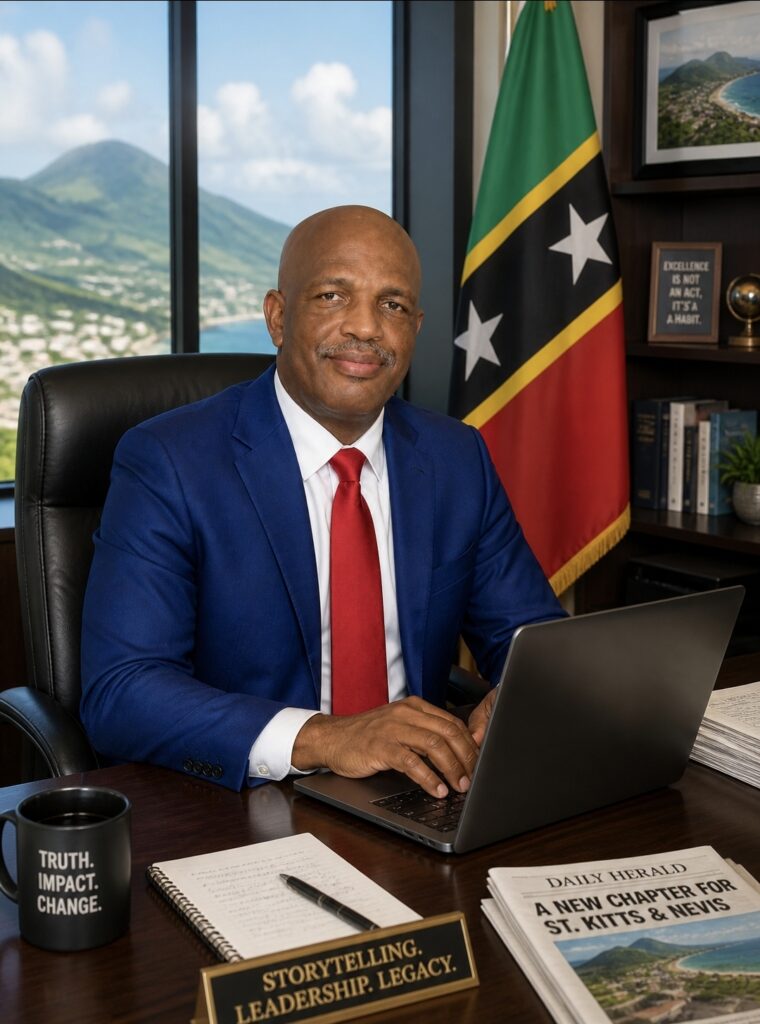
WORLD PRESS FREEDOM DAY: A LIVING EXAMPLE
World Press Freedom Day is not only about defending journalists — it is about celebrating those who embody the very essence of the profession.
Erasmus Williams stands as that embodiment.
- A journalist who reported from within history
- A communicator who served with integrity at the highest level
- A historian who continues to preserve truth for future generations
A LEGACY WRITTEN IN COURAGE AND INK
In a region that has witnessed revolution, resilience, and rebirth, Erasmus Williams remains a steady chronicler — reminding us that journalism is not just about headlines, but about holding the line of truth when it matters most.
On this World Press Freedom Day, St. Kitts and Nevis salutes a veteran, a patriot, and a guardian of Caribbean history.
Because without voices like his — history risks being forgotten.

















Leave a comment
You must be logged in to post a comment.